South Bali's Water Crisis Is Reshaping Real Estate in 2026, Here's What Villa Owners, Builders, and Investors Need to Know
14 Agustus 2026
Bali just had its best tourism year on record. In 2026, the island was named the world's top travel destination after welcoming nearly seven million international visitors in 2025 alone. For anyone who owns, builds, or invests in property here, that headline sounds like good news.
But talk to anyone managing a villa in Canggu, Uluwatu, Berawa, or Seminyak right now, and you'll hear a quieter story running underneath the good numbers: the taps are getting less reliable, groundwater is getting harder to pull, and the rules around new construction are tightening fast. Water, not land, not labor, is quickly becoming the resource that decides whether a South Bali property performs the way its owner expects.
This isn't a scare story. It's a practical look at what's actually changing on the ground, and what it means if you own a villa, manage a construction project, or are putting money into Bali property this year.
Why South Bali's Water Supply Is Under Pressure
A few forces are converging at once, and it's worth understanding each one.
Demand has outgrown the pipes. Government estimates put Bali's water demand on track to hit around 7,991 liters per second by 2025, up sharply from roughly 5,952 L/s in 2021. Tourism accommodation alone is now thought to account for roughly two-thirds of the island's total water use. A resort guest can use 2,000–4,000 liters a day between pools, gardens, and laundry compared to 30–50 liters for an average local resident.
PDAM coverage is thin and uneven. In parts of greater Denpasar and South Bali, official piped water reaches only around half of households, and pressure is often too low or intermittent to rely on. In areas like Uluwatu, some residents describe water moving through the pipe network for as little as an hour a day, on a good day.
Groundwater is running out of room. As villa and hotel developments keep drilling their own wells to cover the gap, coastal aquifers in parts of South Bali are drawing down faster than they refill, raising real concerns about saltwater intrusion into the water table over the long term.
The regulatory environment is shifting under everyone's feet. In response, 2026 has brought a construction moratorium affecting new tourism accommodation permits in several districts, alongside the completed transition from the old IMB permit system to PBG (Persetujuan Bangunan Gedung) and SLF occupancy certification. The rules aren't static, they're being actively rewritten as the water and land-use picture becomes harder to ignore.
Put together, these trends mean that "just drill a well" or "just connect to PDAM" is no longer a safe assumption for a South Bali property it's a planning decision with real financial consequences.
What This Means If You Own a Villa
For villa owners, water reliability now sits right next to Wi-Fi and air conditioning on the list of things that determine guest reviews and repeat bookings. A dry pool or a brown-water shower during peak season doesn't just annoy a guest, it shows up in a review that follows the property for years.
Owners who are ahead of this trend are treating water the way they'd treat backup power: not a nice-to-have, but infrastructure. That typically means:
A properly sized tandon (water storage tank) that can buffer several days of normal usage, not just a few hours.
A scheduled relationship with a trusted water delivery supplier, rather than scrambling to find a truck when the tank runs low during high season.
Routine pool refilling and top-up service that doesn't depend on unreliable mains pressure, especially during the dry season when evaporation and guest turnover both spike.
The villas holding their value and their booking calendar through 2026 are, almost without exception, the ones where water supply was solved quietly in the background, not the ones improvising during a shortage.
What This Means for Construction and Project Managers
If you're managing a build in South Bali right now, water touches nearly every phase of the project, and the margin for improvisation has shrunk.
During construction, curing concrete, mixing, dust control, and site sanitation all need a dependable, high-volume water source and relying solely on a site well is increasingly risky given falling water tables in several coastal zones. Delays caused by an unreliable water source are one of the most avoidable and most common reasons a build falls behind schedule.
Once the project is complete, the building's long-term water strategy is now part of what gets scrutinized under SLF occupancy requirements, and increasingly part of what sophisticated buyers ask about before they sign. A ground tank sized correctly for the finished property's expected occupancy, paired with a dependable delivery partner, has become as standard a line item as electrical or structural planning.
Project managers who build in a reliable ground tank delivery arrangement from the start rather than treating water as an afterthought once the building is finished tend to avoid two expensive problems: construction delays from dry wells, and post-handover complaints from owners whose water pressure doesn't match what was promised in the marketing.
What This Means for Property Investors
For investors evaluating South Bali property in 2026, water access has quietly become a due-diligence item on par with land certificate status or zoning classification.
A few questions are worth asking before committing to any villa purchase or development site:
Is the property connected to PDAM, and if so, what's the actual, verified water pressure and uptime not the theoretical connection?
Is there an existing well, and if so, what does current groundwater depth and salinity look like in that specific sub-district?
Is there room on-site for adequate tandon or ground tank storage, and is a reliable delivery service already operating in that area?
Given the current moratorium environment, is the asset's permitting (PBG/SLF) fully in order, or does it rely on grandfathered status that could complicate resale?
Properties with a clear, resilient water plan are increasingly commanding a premium over otherwise-comparable listings that leave the question unanswered. In a market where the top-line tourism numbers are strong but the underlying infrastructure is strained, water reliability is turning into a genuine differentiator between an asset that performs and one that quietly underdelivers.
The Practical Takeaway
None of this means South Bali is a bad bet the island remains one of the world's most in-demand destinations, and the fundamentals of that demand aren't going anywhere. What's changed is that water can no longer be assumed. It has to be planned for, the same way electricity, internet, and access roads are planned for.
Whether you're topping up a pool ahead of a fully booked week, keeping a build site running through the dry season, or sizing a ground tank for a property that hasn't broken ground yet, having a dependable local water partner is no longer a backup plan it's part of the core infrastructure of doing property well in South Bali.
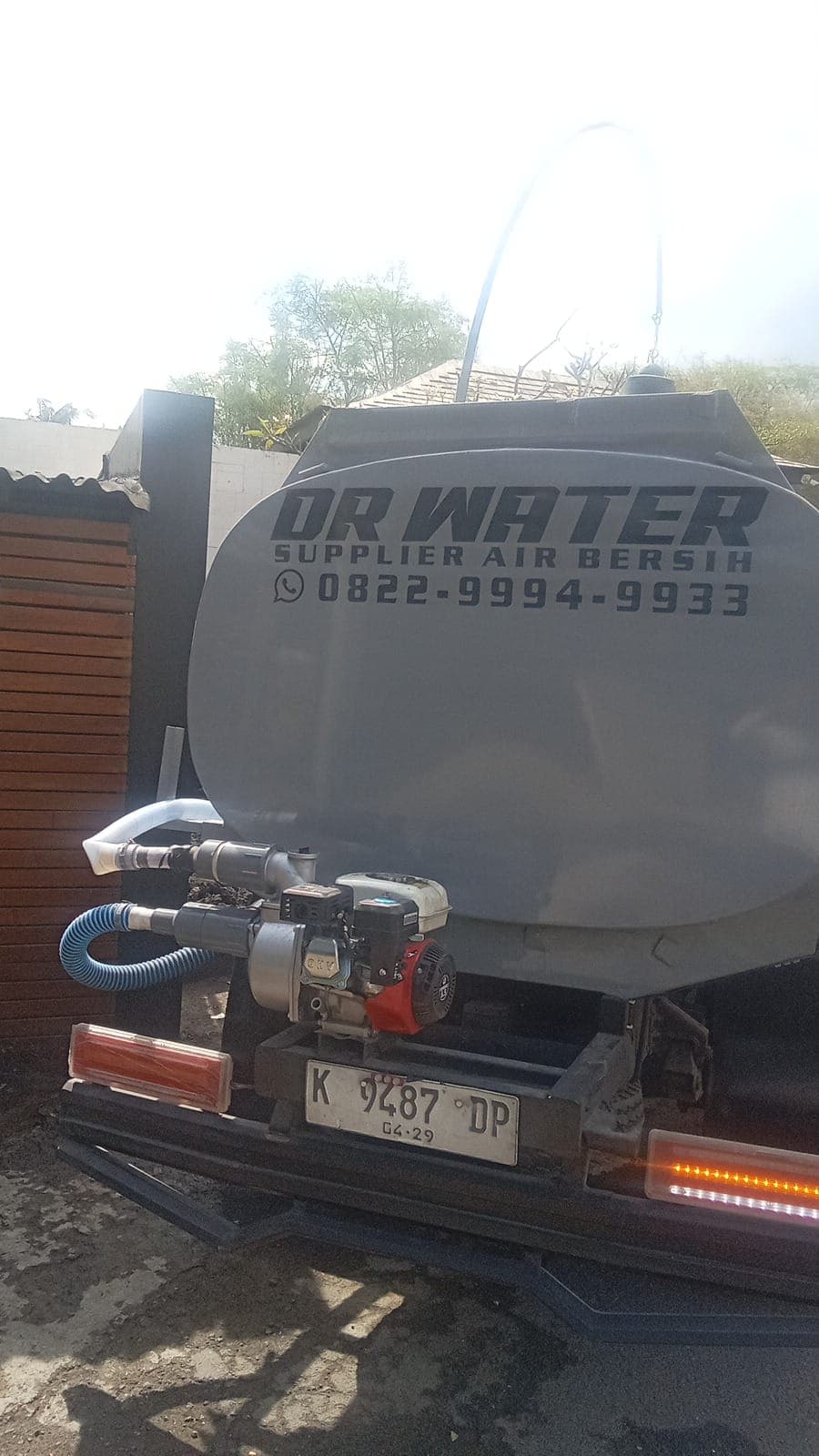
DR Water Supply delivers pool filling, tandon, and ground tank water across South Bali, built around exactly the kind of reliability villa owners, construction managers, and investors need in a tightening water market. If water planning is part of your next project or your ongoing villa operations, get in touch to talk through what a dependable supply schedule looks like for your property.
Butuh Air Bersih Berkualitas?
Pesan sekarang melalui WhatsApp dan dapatkan layanan pengiriman air bersih terbaik di Bali
Order via WhatsApp