How Much Water Does a Bali Villa Really Need? A Practical Water Tank & Backup Supply Guide
25 Agustus 2026
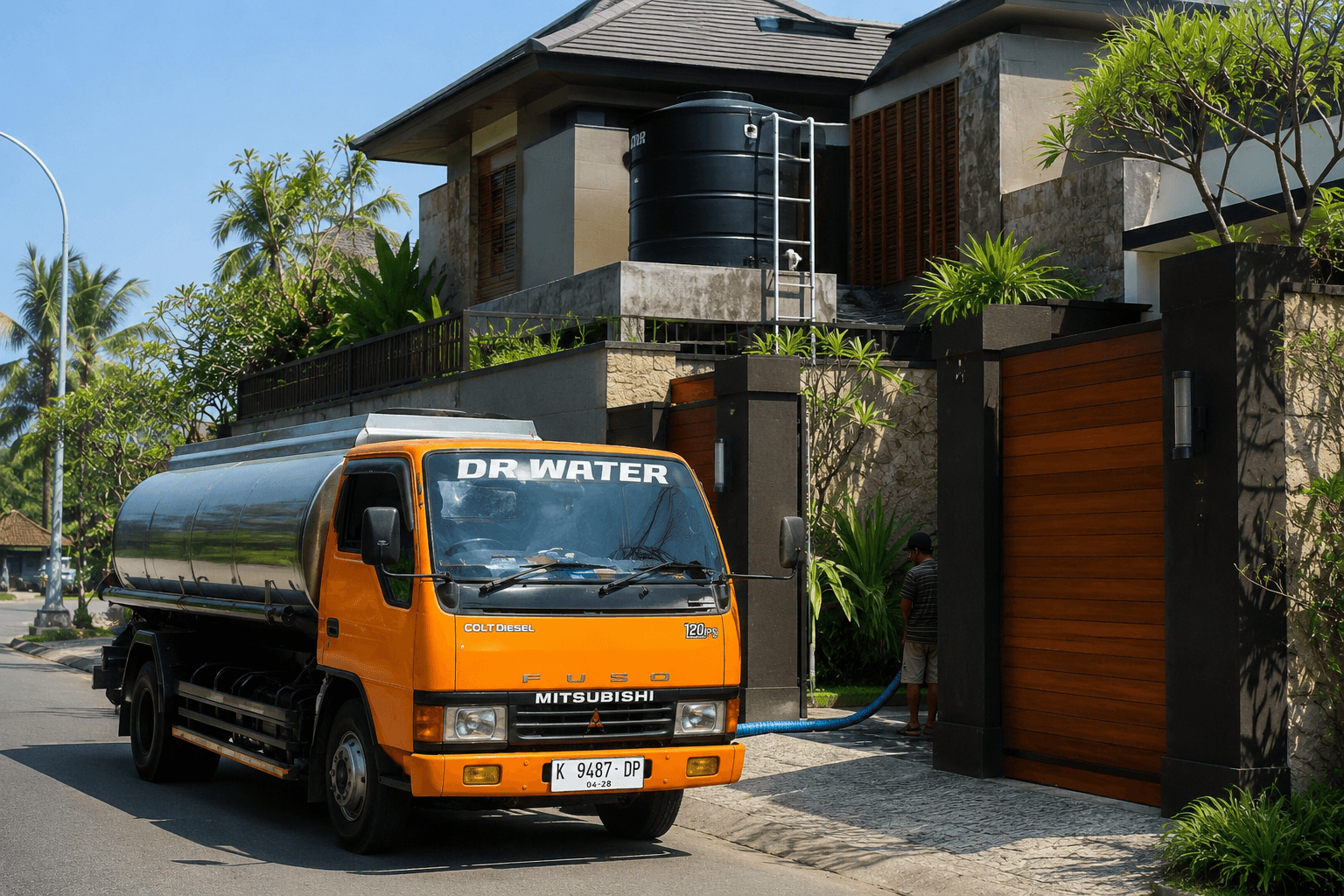
Planning water supply for a villa in Bali? Learn how to estimate daily water demand, choose the right storage capacity, and prepare a reliable backup water supply before the tank runs dry.
For a villa in Bali, water is easy to overlook—until there isn't enough of it.
A villa can have beautiful architecture, a private swimming pool, a fully equipped kitchen, and five-star amenities, but a simple water shortage can quickly become a serious operational problem.
Guests need showers. Bathrooms need to work. Swimming pools need topping up. Staff need water for cleaning and laundry. Gardens may need irrigation. And during periods of high occupancy, water consumption can increase significantly.
This is why water storage and backup supply are becoming an increasingly important part of villa management in Bali in 2026.
But how much water does a Bali villa actually need?
Why Water Storage Matters More in Bali
Bali's tourism and property sectors continue to generate strong demand for water, while the island's water resources are under increasing pressure.
The Provincial Government of Bali has identified a significant gap between total water demand and available water resources, highlighting the importance of better water management and more reliable supply strategies.
At the same time, tourism demand remains strong. Bali recorded more than 553,000 direct foreign tourist arrivals in April 2026 alone, according to Statistics Indonesia (BPS) Bali.
For villa owners and property managers, this creates a simple operational reality:
You cannot always assume that your normal water source will be available exactly when you need it.
A properly sized storage tank gives you a buffer.
A reliable bulk water supplier gives you another layer of protection.
Together, they can make a villa much more resilient.
How Much Water Does a Bali Villa Use?
There is no single number that applies to every villa.
Water consumption depends on:
Number of guests
Number of bedrooms
Occupancy rate
Number of bathrooms
Swimming pool size
Laundry facilities
Cleaning frequency
Garden irrigation
Staff requirements
Kitchen and restaurant operations
Water pressure and plumbing efficiency
A small two-bedroom villa used occasionally will have very different water requirements from a six-bedroom luxury villa operating at high occupancy.
As a practical starting point, villa managers can estimate daily water demand based on the number of people staying at the property, then add additional demand for pools, cleaning, landscaping and other facilities.
For example:
Villa Type | Typical Occupancy | Basic Daily Demand* |
2-bedroom villa | 2–4 guests | 400–800 L |
3-bedroom villa | 4–6 guests | 800–1,500 L |
4-bedroom villa | 6–8 guests | 1,200–2,000 L |
5–6 bedroom villa | 8–12+ guests | 1,600–3,000+ L |
*These are planning estimates, not engineering specifications. Actual consumption can be significantly higher depending on guest behaviour and property facilities.
And this is before considering swimming pools.
Don't Forget the Swimming Pool
Swimming pools can dramatically change a property's water requirements.
A pool does not need to be completely refilled every day, but water is continuously lost through:
Evaporation
Splashing
Backwashing
Cleaning
Maintenance
Occasional draining and refilling
For example, a villa with a large infinity pool in an exposed location can experience considerably more water loss than a smaller shaded pool.
This is particularly important for villas in areas such as Uluwatu, Pecatu, Bingin, Jimbaran and other exposed locations in South Bali, where heat, wind and strong sunlight can increase evaporation.
A property manager should therefore treat pool water as a separate part of the water planning calculation rather than simply adding it to normal household consumption.
How Big Should a Villa Water Tank Be?
There is no universal “perfect” tank size.
The right capacity depends on your daily consumption and how long you want the property to operate without external water delivery.
A simple way to think about it is:
Required storage = Daily water demand × Desired backup days
For example:
If your villa uses approximately 2,000 litres per day and you want two days of backup:
2,000 L × 2 days = 4,000 litres
A tank of around 4,000–5,000 litres could therefore provide a reasonable starting point.
For a larger villa or property with a swimming pool, a 5,000–10,000 litre storage system may be more appropriate depending on actual consumption.
The important point is not simply buying the biggest tank possible.
It is creating enough storage for the property's real operating conditions.
Why a Backup Water Supply Is Still Necessary
A large water tank is useful, but it is not an unlimited solution.
Eventually, the tank needs to be refilled.
This is where bulk water delivery becomes an important part of villa water management.
Instead of waiting until the tank is completely empty, property managers can schedule water delivery when the tank reaches a predetermined minimum level.
For example:
10,000 L tank
→ Normal operation → Tank reaches 40% → Schedule delivery → Tank refilled → Property continues operating normally
This is much safer than:
Tank empty → Guests complain → Emergency delivery required
The second scenario can create unnecessary stress, especially during busy periods.
Scheduled Delivery vs Emergency Water Delivery
There are two common approaches to bulk water supply.
1. Scheduled Water Delivery
Scheduled delivery is ideal for properties that already know their approximate consumption.
For example:
Weekly delivery
Twice-weekly delivery
Monthly pool top-up
Scheduled construction supply
Regular ground tank refilling
This approach makes water supply part of the property's normal operating schedule.
2. Emergency Water Delivery
Emergency delivery is useful when something unexpected happens.
Examples include:
Main water supply interruption
Empty ground tank
Unexpectedly high villa occupancy
Pool maintenance
Construction delays
Water pressure problems
Dry-season shortages
Emergency delivery can prevent a relatively small water problem from becoming a guest-service problem.
Water Tank + Bulk Delivery: A Better Backup Strategy
For many Bali villas, the most practical strategy is not choosing between storage and water delivery.
It is using both.
Think of the system as three layers:
Layer 1: Primary Water Source
This could be the property's normal water connection or another legally available source.
Layer 2: On-Site Storage
A ground tank or storage tank provides a buffer when supply fluctuates.
Layer 3: Bulk Water Delivery
A water tanker provides additional supply when the storage level becomes too low.
This creates a much more resilient system.
Primary source → Storage tank → Property
with
Bulk water delivery → Storage tank → Property
as the backup path.
Groundwater Is Not Something Property Owners Should Ignore
Groundwater management has also become a more important issue for Bali businesses in 2026.
Commercial groundwater users are facing increased attention around permits and compliance. Badung Regency, for example, has been enforcing requirements related to groundwater permits for commercial users.
This means villa owners and property managers should not simply assume that having a well automatically means having an unlimited and risk-free water source.
Before relying heavily on groundwater, property owners should understand the applicable permit, extraction and compliance requirements for their property.
For properties that need additional water capacity, using a properly managed storage and delivery strategy can provide an alternative operational backup.
What About Construction Projects?
Water planning is not only important after a villa is completed.
It can be even more important during construction.
Construction sites require water for activities such as:
Concrete and mortar work
Mixing materials
Cleaning
Dust control
Equipment washing
Worker facilities
Tile and stone installation
Landscaping
Pool construction
A construction project that runs out of water can lose valuable working time.
For contractors and project managers, water should therefore be included in the project logistics plan alongside electricity, materials, labour and equipment.
A reliable bulk water supplier can help keep the project moving when the permanent water system has not yet been completed.
A Simple Water Planning Checklist for Bali Villa Owners
Before the property enters a busy period, check:
How many guests can the villa accommodate?
What is the average daily water consumption?
How large is the ground tank?
How large is the roof/storage tank?
How much water does the swimming pool require?
How quickly does the tank normally drop?
What happens if the primary water supply stops?
How many days of backup storage do you have?
Do you have a reliable water delivery contact?
Can the tanker access the property easily?
Where is the filling point?
Is the water used for potable or non-potable purposes?
When should the next delivery be scheduled?
These questions are simple, but answering them before a shortage occurs can save considerable time and operational headaches.
Why This Matters for Luxury Villas
In Bali's competitive villa market, water availability is more than a technical issue.
It is part of the guest experience.
A guest may never notice that a villa has a 10,000-litre storage tank and a backup water delivery plan.
And that's exactly the point.
Good infrastructure should work quietly in the background.
The goal is not for guests to know how the villa gets its water.
The goal is for them to turn on the shower, use the bathroom, enjoy the pool and never have to think about it.
Reliable Bulk Water Delivery for Bali Villas
DR Water Supply provides bulk water delivery for villas, swimming pools, ground tanks, storage tanks and construction projects across South Bali.
Whether you need a planned delivery to maintain your regular water level or an urgent refill because your tank is running low, having a dependable local supplier can be an important part of your property's water management strategy.
For villa owners, property managers, contractors and project teams, the best time to plan your backup water supply is before the tank is empty.
If you are unsure how much water your property needs, start by monitoring your actual daily consumption.
Once you know your average usage, you can determine the right storage capacity and create a practical delivery schedule.
Need bulk water delivery in South Bali? Contact DR Water Supply to discuss your villa, pool, tank or construction water requirements.
Frequently Asked Questions
How much water does a Bali villa need per day?
It depends on occupancy, the number of bedrooms and bathrooms, cleaning, laundry, landscaping and pool usage. A small villa may use several hundred litres per day, while a large luxury villa can require several thousand litres.
What is a good water tank size for a Bali villa?
Many villas can benefit from storage in the 3,000–10,000 litre range, but the correct size depends on actual daily consumption and the desired number of backup days.
Can I use bulk water delivery to fill my villa's water tank?
Yes. Bulk water delivery can be used to refill suitable ground tanks and storage tanks, depending on the property's setup and intended water use.
Is bulk water delivery useful for swimming pools?
Yes. Bulk water delivery can be used for initial pool filling, topping up water levels and certain maintenance or refill requirements.
Is groundwater still a good option for Bali villas?
Groundwater may be available in some locations, but commercial groundwater use is subject to applicable regulations and permits. Property owners should verify their legal and operational requirements before relying on a well as their primary water source.
When should I order a water delivery?
Ideally, before the tank becomes empty. Monitoring the tank level and establishing a minimum reserve level allows deliveries to be planned rather than treated as an emergency.
Final Thought
A reliable Bali villa water supply is not just about having a water source. It is about having enough storage, knowing your consumption, and having a backup plan.
For properties operating in Bali's increasingly competitive tourism and real estate environment, that simple approach can make the difference between a normal day and an avoidable operational problem.
Butuh Air Bersih Berkualitas?
Pesan sekarang melalui WhatsApp dan dapatkan layanan pengiriman air bersih terbaik di Bali
Order via WhatsApp